Articles · 13 December 2025
HR IS BEING ASKED TO DO SOMETHING PRETTY HARD RIGHT NOW
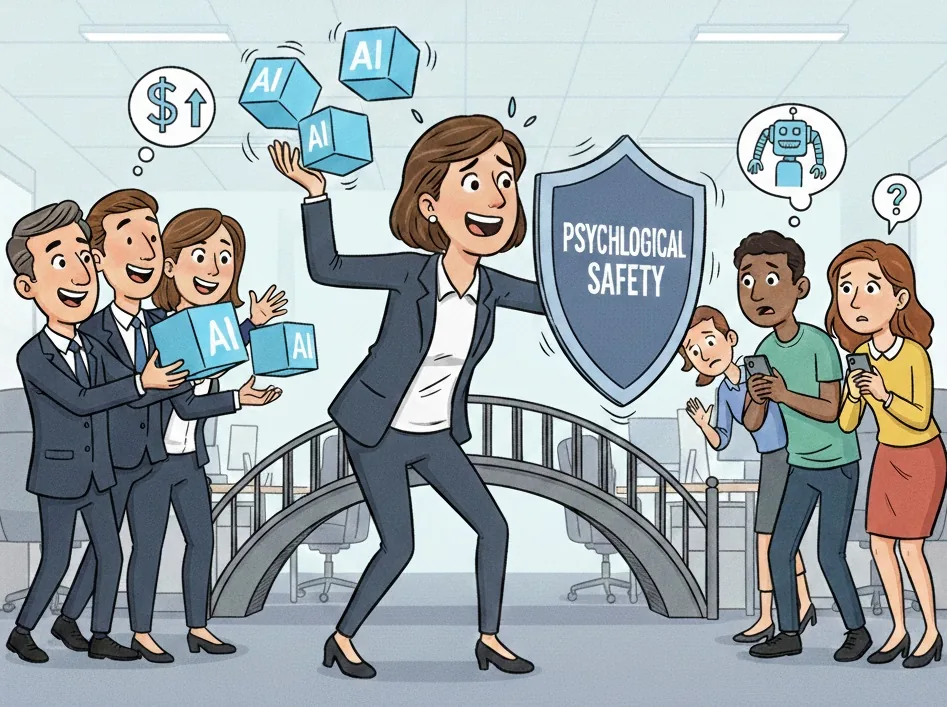
They’re being told to lead AI transformation at pace, to “make everyone AI-ready”, to close skills gaps fast all while holding the emotional temperature of the organisation steady.
They’re being told to lead AI transformation at pace, to “make everyone AI-ready”, to close skills gaps fast all while holding the emotional temperature of the organisation steady.
Because while 82% of organisations now say AI is business-critical, around 70% are struggling to build the capabilities they actually need.
Many aren’t pushing back on AI. They’re hesitating.
There’s a quiet “wait and see” mood in a lot of workplaces. Not because people are anti-technology, but because they’re not convinced AI won’t eventually make them redundant. Interestingly, that anxiety is especially strong among younger workers - 41% of Gen Z’ers say they feel anxious about AI and its impact on their future at work.
And HR sits in the middle. Translating executive urgency into something human. Being asked to drive adoption while managing fear. To reskill at scale, often without any real movement in training budgets despite all the enthusiasm at the top.
It’s no surprise that “AI fatigue” is now showing up in their (HR) conversations, right alongside burnout.
This isn’t a motivation problem. And it’s not a tooling problem either. It’s a trust problem.
Until organisations invest properly in learning, clarity, and psychological safety, AI excitement in the boardroom won’t turn into real adoption on the ground.
People don’t need to be told to “embrace AI”. They need to believe there’s still a place for them when they do.
Sources:
World Economic Forum: Future of Jobs / AI and Workforce Insights
BCG: AI, Skills and Workforce Transformation
McKinsey: The State of AI and Talent Readiness
Deloitte: AI, Workforce Anxiety and HR’s Role
Consultancy.uk; AI fatigue and organisational overhauls
Various Gen Z workplace surveys (2024–2026)
Where does your organisation actually sit?
PRISM answers with evidence rather than opinion.
Explore PRISM